The Indian job market in early 2026 is showing signs of
cautious improvement, but with a distinct shift in where growth is coming from.
According to the latest Naukri JobSpeak Index report, white-collar
hiring overall rose by a modest 3% year-on-year in January, yet demand
for specific skill sets — most notably Artificial Intelligence (AI) andMachine Learning (ML) roles, jumped a significant 34%.
This sharp increase in AI hiring — even while traditional IT
recruitment remains largely flat highlights a fundamental shift in how
companies are structuring their workforce amid economic uncertainties and
technological evolution. In this article, we unpack what these numbers truly
mean for job seekers, employers, and the future of work in India.
Modest Recovery in Overall Hiring Doesn’t Tell the Full
Story
At first glance, a 3% growth in overall white-collar jobs
might seem unspectacular, and that’s because it is a slow recovery, not a boom.
After years of pandemic-related disruptions, global economic headwinds, and
cautious corporate hiring strategies, most sectors are still rebuilding their
confidence before launching large-scale recruitment.
However, beneath this surface number lies a more nuanced
reality:
- Traditional
IT hiring is relatively flat, indicating that legacy tech roles may no
longer be the primary drivers of job growth.
- Non-IT
sectors, including BPO/ITES, hospitality, travel, insurance, and
healthcare, are showing stronger year-on-year momentum, supplying much
of the incremental hiring activity.
This suggests a rebalancing of the job market, where
opportunities are spreading into areas previously overshadowed by conventional
tech recruiting cycles.
AI and Machine Learning: The New Growth Engine
The most striking aspect of the Naukri report is the 34%
rise in AI/ML job roles, a noteworthy departure from the stagnation in
broader IT hiring.
This is not just a statistical bump; it reflects a deeper,
structural transformation in how organisations approach technology:
Why AI Roles Are Booming
- Digital
Transformation Remains a Priority
Companies across sectors — from finance to healthcare — are investing in automation, predictive analytics, and AI-powered decision systems. These technologies can improve efficiency, reduce costs, and deliver better customer experiences. - AI
Skills Are Scarce But Valuable
India currently faces a significant AI talent gap, with demand outstripping supply by a large margin. This has pushed companies to aggressively recruit professionals who can work with AI tools and technologies. - AI
Is Becoming Core to Business Strategy
Beyond specialised technical roles, organisations expect AI fluency even in non-technical functions — for analytics, automation, and insight generation. This is driving demand across experience levels.
These trends align with global observations about AI’s
rising influence on the job market. For example, research shows that companies
prioritise AI across multiple domains, pushing up demand for skills in areas
like Python, deep learning, data science, and machine learning frameworks.
Why Pursuing an AI-Related Degree Matters Now
Given the rapid growth in AI job opportunities, many
students and working professionals are now choosing academic programs that
prepare them for the future of work. Traditional degrees alone may not be
enough — hiring managers increasingly look for specialised education and
practical experience in AI-centric fields.
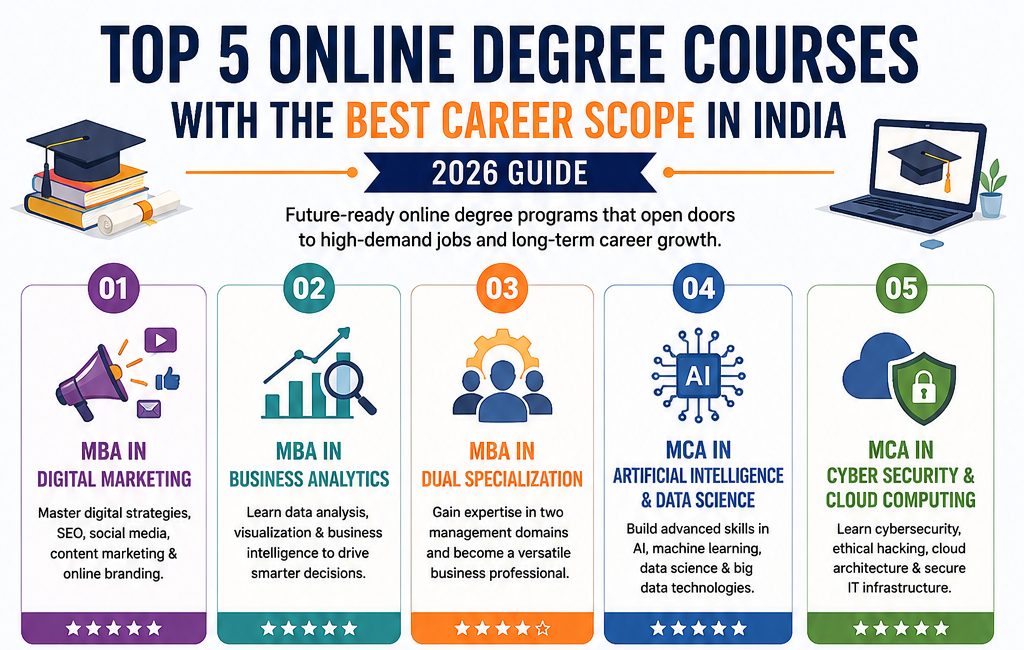
Here are some key AI-related degree programs that are
becoming highly valuable in the Indian job market:
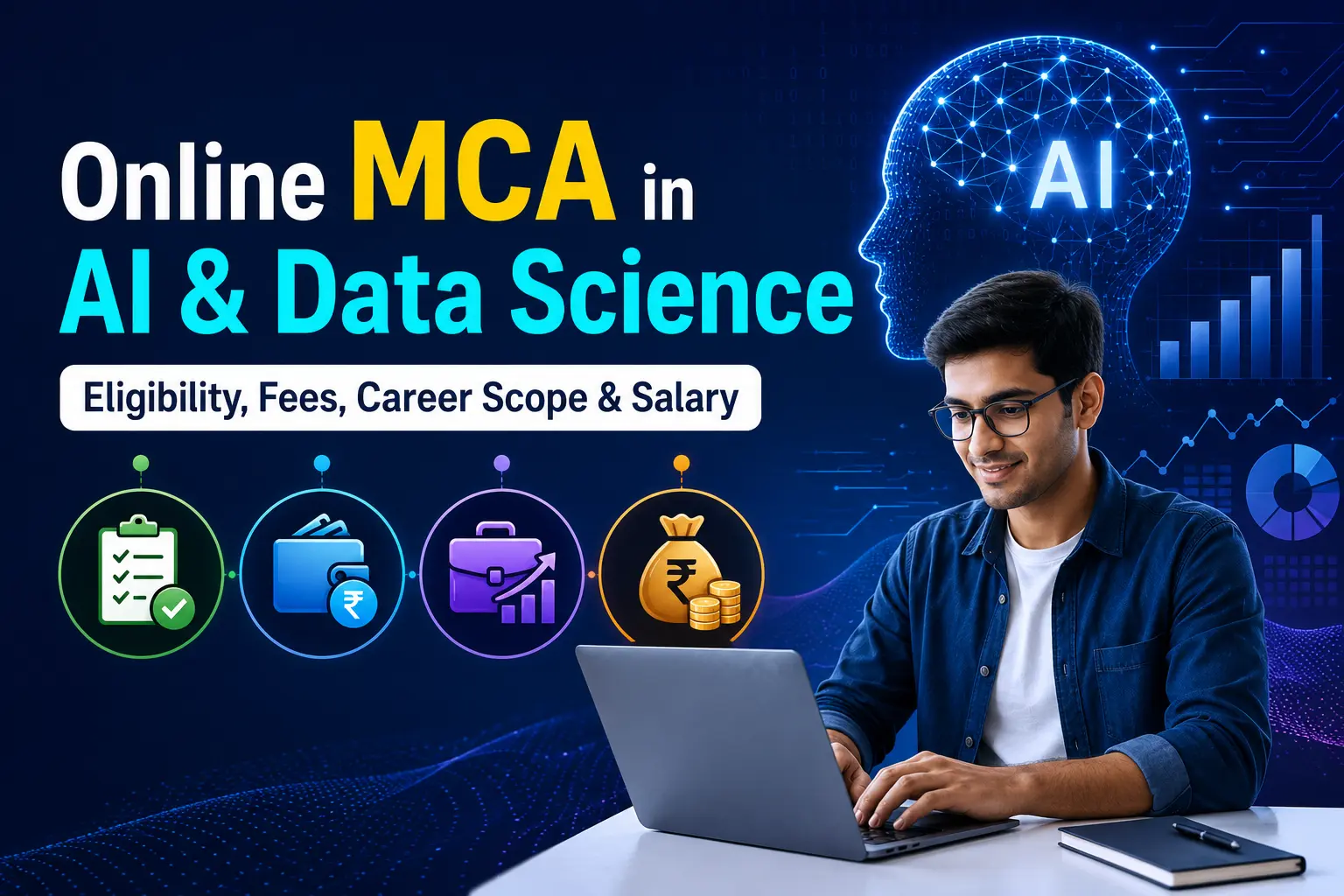
1. Bachelor’s or Master’s in AI and Data Science
This degree focuses on:
- Data
analytics and big data processing
- Statistical
modelling
- Machine
learning algorithms
- Data
visualisation and interpretation
Students learn how to collect, cleanse, analyse, and derive
insights from large datasets, skills that are critical as every industry
becomes more data-driven. Graduates can work as data scientists, data
analysts, business intelligence professionals, and AI specialists.
2. AI and Machine Learning Degrees
These programs dive deeper into:
- Artificial
neural networks
- Deep
learning frameworks
- Computer
vision and natural language processing
- AI
application development
Machine learning engineers and AI specialists are among the
most sought-after roles nationwide, with high salary prospects and strong
long-term employment potential.
3. Diploma or PG Programs in AI
Even for working professionals, short-term or postgraduate
diploma programs in AI and machine learning offer:
- Practical
skill training
- Project-based
learning
- Industry
tools exposure
These courses help individuals pivot into AI-related jobs
without committing to a full multi-year degree.
Why These Programs Are Worth Investing In
- They
align directly with market demand.
- They
prepare candidates for high-growth future roles.
- They
bridge the gap between academic learning and industry needs.
With AI now driving 34% of new job growth in the tech
landscape, academic credentials in AI and data science are no longer optional;
they are becoming a career differentiator.
Entry-Level Hiring Is Also Gaining Ground
Another positive signal from the latest data is the uptick
in fresher hiring, which rose by around 8% year-on-year in
January.
This is meaningful for new graduates entering the workforce:
- It
indicates that companies are willing to invest in early-career talent.
- Growing
sectors such as BPO/ITES, hospitality, and insurance showed
especially strong increases in entry-level roles compared to others.
Emerging studies also indicate that many organisations are
no longer limiting opportunities to traditional metros. Tier-2 cities like
Coimbatore, Jaipur, and others are becoming fresher hiring hotspots,
attracting companies looking for cost efficiency and local talent pools.
This could relieve some pressure for graduates who
previously felt forced to relocate to Delhi or Bengaluru to find opportunities.
Non-Metro Cities Gain Strategic Importance
One of the side effects of this market realignment is the
rising importance of non-metropolitan cities in hiring patterns.
Coimbatore and Jaipur, for instance, have recorded double-digit growth in
job postings, while even Hyderabad and Ahmedabad are seeing notable
increases.
This geographical diversification reflects a larger trend:
- Companies
are decentralising their workforce.
- Lower
operating costs and competitive labour markets in Tier-2 cities are
attracting more investment.
- Local
talent pools are strengthening as educational and professional ecosystems
grow.
For job seekers, especially those who cannot afford
relocation, this signals that fresh opportunities may be available closer to
home.
Does AI Replace Jobs — or Create Them? A Balanced View
While the surge in AI roles is a positive sign, some experts
suggest that AI could also disrupt traditional jobs, especially
repetitive or routine tasks, potentially leading to displacement in certain
roles.
This contrasting viewpoint underscores a key truth of the
modern job market:
AI does not only create jobs — it reshapes them.
Roles requiring creative problem solving, strategic
thinking, and human-centric expertise are less likely to be automated, and
may even increase as AI becomes more integrated into business operations.
Conversely, jobs centred on routine processing or repetitive tasks are most at
risk of being automated — especially in tech and non-tech settings.
This dual potential makes it even more important for job
seekers to upskill continuously and develop hybrid skill sets that
combine domain knowledge with AI fluency.
What Job Seekers Must Do Going Forward
With these market dynamics in play, the approach to career
planning should evolve accordingly:
1. Upskill in AI and Data
Given the dramatic rise in AI-related roles, investing in
AI, ML, data science, cloud computing, and analytics skills can be a career
accelerator.
2. Build Interdisciplinary Expertise
AI doesn’t operate in isolation — it blends with domains
like finance, healthcare, operations, and customer experience. Professionals
who can bridge technical and functional knowledge will be in greater demand.
3. Stay Open to Locations Beyond Metros
With Tier-2 cities opening up new opportunities, mobility
and flexibility can expand your job prospects.
4. Focus on Sustainable Skills
Creativity, decision-making, leadership, and communication
cannot be easily automated. These remain crucial human strengths.
Final Thoughts
The Indian job market in 2026 paints a picture that is far
from uniform: while overall hiring growth is conservative, targeted demand for
modern skills, especially in Artificial Intelligence, Data Science and Machine Learning, is surging.
For job seekers, this means adapting to a landscape where
technology drives opportunity, and traditional pathways may be shifting.
Pursuing AI-related degrees, such as AI and Data Science or AI and Machine
Learning, provides a strategic advantage, equipping you with in-demand
expertise that aligns with future job roles.
Whether you’re a graduate entering the workforce or a professional planning your career pivot, focusing on future-ready skills with AI at the core can give you a competitive edge in India’s evolving job market.
FAQs –
Question: 1. Why are AI jobs increasing in India?
Answer: AI jobs are increasing due to rising demand
for automation, predictive analytics, and data-driven decision-making across
industries such as finance, healthcare, and technology
Question: 2. Is studying AI and Data Science a good career option in India?
Answer: Yes. With the demand for AI professionals increasing rapidly, degrees in AI, Data Science, and Machine Learning can provide strong career opportunities in multiple industries
Question: 3. What skills are required for AI and Data
Science careers?
Answer: Key skills include Python programming,
machine learning algorithms, data analysis, statistics, deep learning, and data
visualization.
Question: 4. Which degree programs help build a
career in AI?
Answer: Popular programs include BCA or MCA in
Artificial Intelligence and Data Science, AI and Machine Learning programs, and
postgraduate diplomas in AI-related technologies.