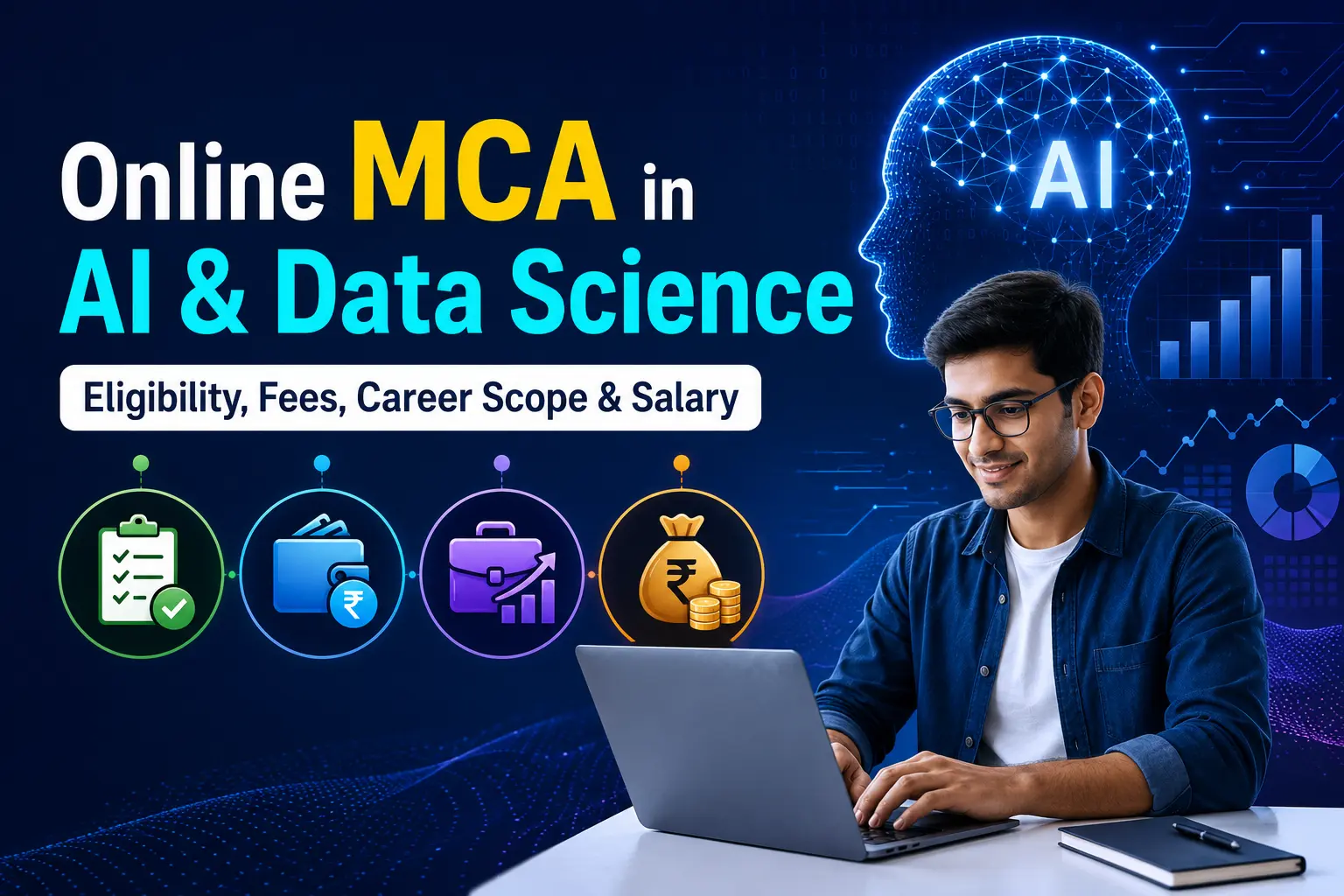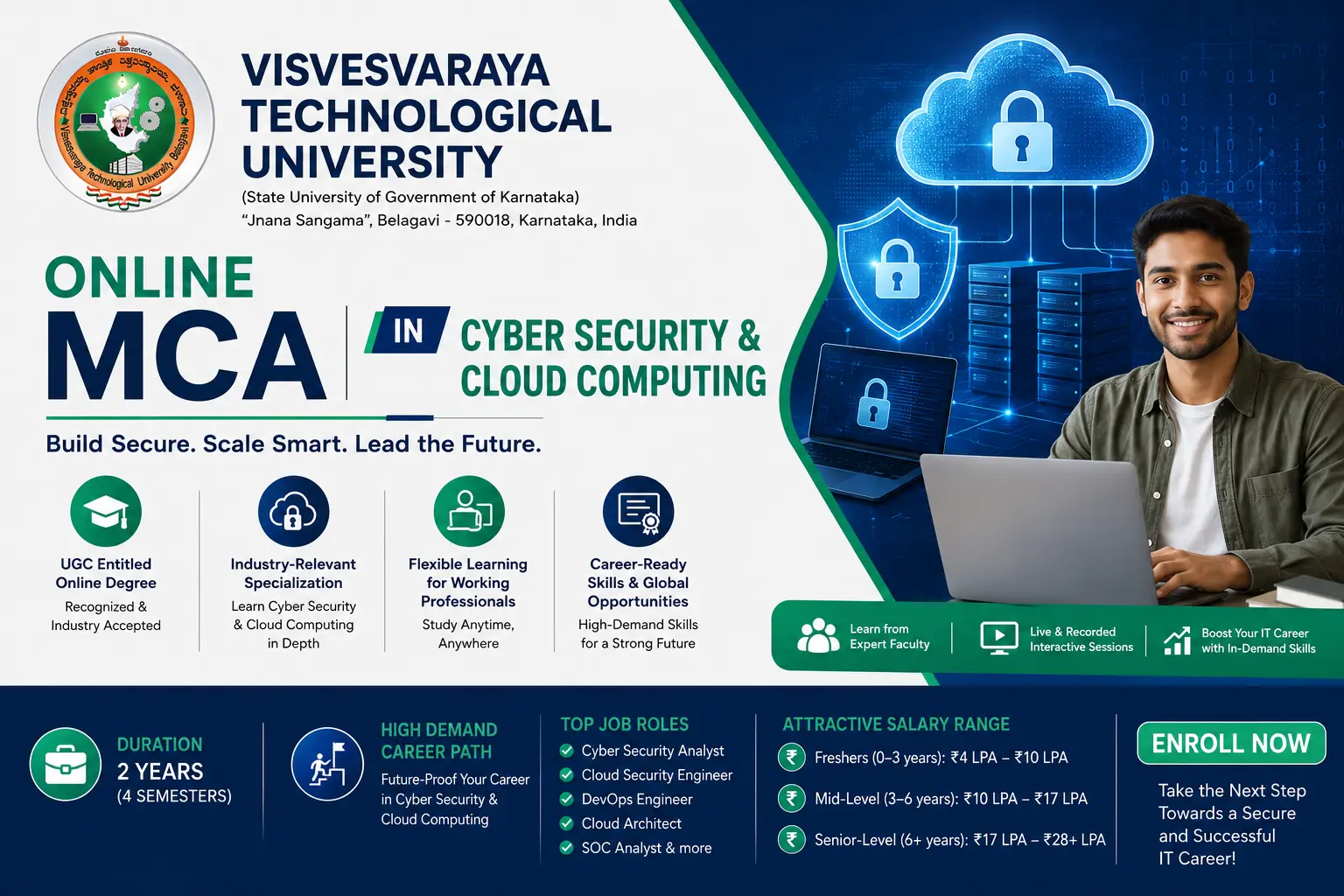
The demand for qualified technology professionals is growing rapidly as businesses across India continue to adopt cloud computing, artificial intelligence, data analytics, cybersecurity, automation and digital platforms. This changing technology landscape has also increased the need for professionals who have strong knowledge of computer applications along with practical problem-solving skills. For graduates who want to build a career in the IT sector, a Master of Computer Applications (MCA) can be a valuable postgraduate qualification.
An Online MCA offers a flexible way to pursue
postgraduate computer education without attending a traditional classroom every
day. It can be particularly useful for graduates who are working, preparing for
competitive opportunities or looking for a flexible study option. Depending on
the university and specialisation, students can develop knowledge in software
development, databases, programming, data science, cloud computing,
cybersecurity and other technology areas. This guide covers Online MCA
eligibility, fees in India, career scope, salary, job roles and frequently
asked questions to help prospective students make an informed decision.
What Is an Online MCA?
An Online MCA is a postgraduate degree program focused on
computer applications, software technologies and information systems, delivered
through an online learning model. The program generally combines theoretical
concepts with practical learning in areas such as programming, database
management, computer networks, software engineering and web technologies.
Many modern MCA programs also introduce students to emerging
areas such as Artificial Intelligence, Data Science, Cloud Computing and
Cybersecurity. The exact subjects depend on the university and chosen
specialisation.
The online format allows students to access lectures,
learning materials, assignments and academic support remotely. This flexibility
makes the program an option for both fresh graduates and working professionals
who want to strengthen their academic qualifications while managing other
responsibilities.
Online MCA Eligibility in India
Eligibility criteria can vary between universities, so
students should always check the latest admission requirements before applying.
In general, candidates need a bachelor's degree from a recognised university.
Graduates from disciplines such as Computer Applications,
Computer Science, Information Technology, Engineering, Mathematics and related
fields may find an MCA particularly relevant. Some universities may also accept
graduates from other disciplines subject to specific requirements, such as
having studied Mathematics or Computer Science at a qualifying level.
The minimum percentage requirement can also differ between
institutions. Therefore, students should review the university's official
eligibility criteria, admission guidelines and applicable regulatory
requirements before submitting an application.
Online MCA Fees in India
One of the major factors students consider while selecting
an Online MCA is program cost. Fees differ depending on the university,
curriculum, specialisation, learning resources, student support and other
academic facilities.
For planning purposes, Online MCA fees in India can range
from approximately ₹70,000 to ₹2,50,000 for the complete program. The
actual fee may be lower or higher depending on the institution and program
structure.
|
Fee Factor |
What Students Should Check |
|
Total program fee |
Complete cost of the MCA |
|
Semester fee |
Whether payment is made semester-wise |
|
Examination fee |
Whether exam charges are included |
|
Learning resources |
Digital classes, study material and academic resources |
|
Student support |
Academic and technical assistance |
|
Additional charges |
Any applicable registration or other fees |
Students should not choose an MCA solely on the basis of the
lowest fee. Recognition, curriculum quality, faculty support, examination
process, practical exposure and career services are equally important when
comparing online programs.
Online MCA Course Structure and Subjects
The syllabus of an Online MCA varies by university, but
students generally study a combination of fundamental and advanced computer
application subjects.
Common areas may include Programming, Data Structures,
Database Management Systems, Operating Systems, Computer Networks, Software
Engineering, Web Technologies, Computer Architecture and Object-Oriented
Programming.
Depending on the program, students may also study
specialised subjects related to Artificial Intelligence, Machine Learning,
Data Science, Cloud Computing & Cybersecurity, Big Data and Data Analytics.
Practical assignments and projects can play an important
role in developing industry-relevant skills. Students should look for programs
that provide opportunities to apply classroom concepts to practical technology
problems.
Career Scope After Online MCA
An MCA can open career opportunities across India's growing
IT and digital economy. Graduates can explore employment in software companies,
IT services organisations, banks, fintech companies, e-commerce businesses,
consulting firms, healthcare organisations, educational technology companies
and startups.
The career path depends largely on the student's interests
and technical strengths. Someone who enjoys programming may pursue software
development, while a student interested in data can explore analytics or data
science. Those interested in infrastructure may consider cloud computing, while
cybersecurity offers opportunities in security operations and information protection.
An Online MCA can therefore provide a broad foundation
rather than limiting graduates to a single career path.
Top Job Roles and Salary Potential After Online MCA
Salary varies according to experience, technical skills,
location, company, industry and job responsibilities. The following figures are
indicative salary ranges for career planning and should not be treated as
guaranteed packages.
|
Job Role |
Indicative Salary in India |
|
Software Developer |
₹4–10 LPA |
|
Data Scientist |
₹5–15 LPA |
|
Cloud Engineer |
₹7–16 LPA |
|
Cybersecurity Analyst |
₹6–15 LPA |
|
IT Project Manager |
₹10–25 LPA |
Software Developer
Software Developers design, build, test and maintain
applications and software systems. This is one of the most common career
options after an MCA. Professionals can work with programming languages,
databases, APIs and software development frameworks to create solutions for
businesses and consumers. The indicative salary range is ₹4–10 LPA,
depending on experience and technical skills.
Data Scientist
Data Scientists analyse large volumes of data to identify
patterns, generate insights and support business decisions. The role often
involves statistics, programming, machine learning and data visualisation.
Candidates with strong analytical and technical skills can explore
opportunities in sectors such as banking, e-commerce, healthcare and
technology. The indicative salary range is ₹5–15 LPA.
Cloud Engineer
Cloud Engineers work with cloud infrastructure, applications
and services. They may be responsible for deployment, system performance,
scalability and cloud security. Knowledge of cloud platforms and related
technologies can help MCA graduates pursue this career path. The indicative
salary range is ₹7–16 LPA.
Cybersecurity Analyst
Cybersecurity Analysts help organisations identify and
respond to digital security threats. Their work can include monitoring systems,
analysing security alerts, identifying vulnerabilities and supporting incident
response. As businesses become increasingly dependent on digital systems,
cybersecurity skills are becoming valuable across industries. The indicative
salary range is ₹6–15 LPA.
IT Project Manager
IT Project Managers coordinate technology projects from
planning through implementation. They work with technical teams, stakeholders
and business leaders to manage timelines, resources, budgets and project
objectives. With experience and strong communication and leadership skills, MCA
graduates can progress towards project management positions. The indicative
salary range is ₹10–25 LPA.
Entry-Level vs Experienced Online MCA Salaries
An MCA qualification can provide a foundation for entering
the technology sector, but salary growth generally depends on experience and
skill development.
|
Experience Level |
Indicative Annual Salary |
|
Freshers / Early Career (0–5 years) |
₹4–10 LPA |
|
Mid-Level (5–8 years) |
₹10–15 LPA |
|
Senior-Level (8+ years) |
₹15–25 LPA+ |
These figures are indicative and can vary substantially. A
professional with specialised technical expertise, strong project experience
and relevant certifications may command a different salary from someone with
similar years of experience but fewer specialised skills.
Skills to Develop Alongside an Online MCA
A postgraduate degree is an important academic
qualification, but technology careers also require continuous practical
learning. Students should focus on developing skills that align with their
intended career path.
For software development, programming languages, data
structures, databases, version control and software development practices are
useful. Students interested in data should strengthen Python, SQL, statistics,
machine learning and data visualisation.
For cloud careers, students can learn cloud platforms,
networking, virtualisation and basic DevOps concepts. Those interested in
cybersecurity can develop knowledge of networks, operating systems, security
tools, threat detection and security practices.
Communication, analytical thinking, teamwork and
problem-solving are equally important. Technology professionals often need to
explain technical concepts to clients, managers and non-technical teams.
Online MCA vs Traditional MCA
The biggest difference between online and traditional
learning is the mode of delivery. A traditional MCA generally requires regular
physical attendance, while an Online MCA allows students to study remotely.
|
Factor |
Online MCA |
Traditional MCA |
|
Learning mode |
Online |
Classroom-based |
|
Flexibility |
High |
Comparatively lower |
|
Location |
Study remotely |
Usually campus-based |
|
Suitable for working professionals |
Yes |
More challenging |
|
Learning resources |
Digital |
Classroom + campus resources |
|
Daily campus attendance |
Generally not required |
Generally required |
The better option depends on an individual's circumstances,
learning preferences and career goals. Students who value flexibility may find
online learning convenient, while those who prefer face-to-face classroom
interaction may prefer a traditional program.
Is Online MCA Worth It?
An Online MCA can be a worthwhile postgraduate option for
students who want to develop their computer application knowledge while
maintaining flexibility. However, the value of the degree depends on more than
the program title.
Before enrolling, students should examine the university's
recognition, curriculum, faculty, learning platform, assessment process,
student support and practical exposure. They should also consider whether the
program's specialisation matches their intended career.
Most importantly, students should use the MCA period to
build practical experience. Personal projects, internships, certifications,
coding practice and industry exposure can strengthen a graduate's profile and
improve their readiness for employment.
Future Scope of Online MCA in India
India's technology sector continues to evolve with
developments in AI, cloud computing, cybersecurity, data-driven business and
digital transformation. This creates opportunities for professionals who can
understand both computing fundamentals and emerging technologies.
The future scope of an MCA graduate can therefore extend
beyond traditional software development. Depending on skills and
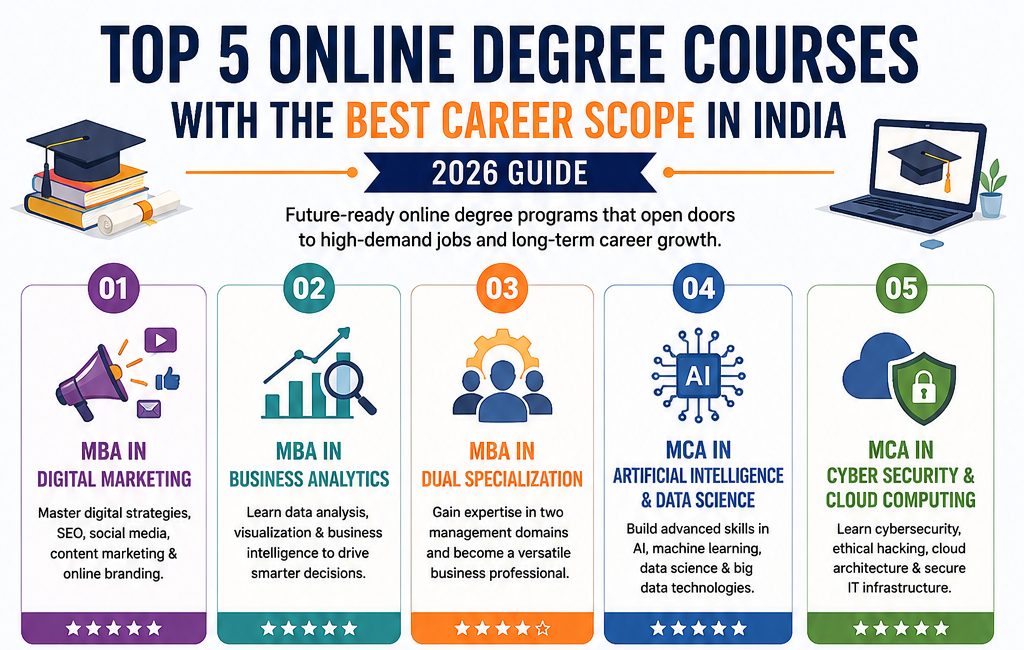
specialisation, graduates can move towards AI and Data Science, Cloud Computing & Cybersecurity, software engineering, data analytics, IT consulting
and technology management.
Continuous learning will remain important. Technology
changes quickly, and professionals who regularly update their technical
knowledge are better positioned to adapt to new tools, platforms and workplace
requirements.
Conclusion
An Online MCA can provide a strong postgraduate
foundation for graduates who want to build a career in India's technology and
digital sectors. With Online MCA fees ranging from approximately ₹70,000 to
₹2,50,000, the program can offer a flexible route to advanced computer
education, although actual fees vary by university.
Career opportunities include Software Developer, Data
Scientist, Cloud Engineer, Cybersecurity Analyst and IT Project Manager,
with indicative salaries ranging from ₹4 LPA at entry levels to ₹25 LPA+ for
senior-level roles, depending on experience, skills and employer.
For students considering an Online MCA, the best approach is
to look beyond the degree alone. Select a credible program, understand its
curriculum, develop practical technical skills, build a strong project
portfolio and continue learning throughout your career. With the right
combination of academic knowledge and practical capability, an Online MCA can
become a useful stepping stone towards a long-term career in technology.
Frequently Asked Questions
1. What is an Online MCA?
An Online MCA is a postgraduate degree program in computer
applications delivered through an online learning format. It covers areas such
as programming, databases, software development, computer networks and emerging
technology domains.
2. What is the eligibility for an Online MCA in India?
Generally, candidates need a bachelor's degree from a
recognised university. Specific requirements, minimum marks and subject
prerequisites vary between universities, so applicants should check the latest
admission criteria before applying.
3. What is the fee for an Online MCA in India?
Online MCA fees can range from approximately ₹70,000 to
₹2,50,000 for the program, depending on the university, curriculum,
specialisation and academic facilities.
4. What is the salary after an Online MCA?
Freshers and early-career professionals may earn
approximately ₹4 LPA to ₹10 LPA, while mid-level professionals may earn
₹10–15 LPA and senior professionals may reach ₹15–25 LPA+. Actual salary
depends on experience, skills, job role, employer and location.
5. What are the best jobs after an Online MCA?
Popular career options include Software Developer, Data
Scientist, Cloud Engineer, Cybersecurity Analyst and IT Project Manager.
Other opportunities may be available in areas such as data analytics, AI,
software testing, database administration and IT consulting.
6. Is an Online MCA good for working professionals?
Yes. The online learning format can provide greater
flexibility for working professionals who want to pursue a postgraduate
qualification while continuing their careers. Students should still evaluate
the program's recognition, curriculum and academic support before enrolling.
7. Which skills are useful after completing an Online
MCA?
Useful skills depend on the chosen career. Programming, SQL, databases, cloud computing, cybersecurity, data analytics, AI, problem-solving and communication skills can all support career development. Practical projects and relevant certifications can further strengthen a graduate's profile.